
The most common and most fixable decorating mistake is not a color choice or a furniture decision. It is a rug that is too small. An undersized rug does not just look wrong — it actively works against every other correct decision in the room. A well-scaled sofa floating above a rug that barely clears the coffee table looks unanchored. A carefully arranged seating group loses its logic when the rug beneath it stops before the furniture does.
The reason the mistake is so common is that rugs are almost always evaluated in isolation — in a showroom, flat on the floor, without the furniture that will surround them. A 5×8 reads as substantial until a sectional arrives. An 8×10 feels generous until a dining table and six chairs make it disappear. Rug sizing is a relational decision, not an absolute one, and the only way to get it right is to know the specific numbers before you buy.
This is those numbers.
The Floor Reveal: Your Starting Point
Before calculating the correct rug size for any room, establish the floor reveal — the border of exposed floor between the rug’s edge and the wall. The standard target is 18 to 24 inches on all sides. This prevents the rug from reading as wall-to-wall carpet while maintaining enough presence to anchor the room. Less than 18 inches and the rug dominates the floor plan. More than 24 inches and it begins to look like a mat dropped into a larger space.
Use the floor reveal as your starting point, not your deciding factor. In every case where the floor reveal guideline conflicts with the furniture grouping rule — where the rug needs to be larger to properly anchor the furniture — the furniture grouping wins. A rug that correctly serves the furniture at 20 inches of floor reveal is right. A rug that achieves a perfect 24-inch border but leaves furniture legs floating is wrong, regardless of how the numbers look on paper.
Living Room Rug Sizing
The governing rule for living room rugs is front legs on, always. The front legs of every major seating piece — sofa, loveseat, chairs — should rest on the rug. A rug that only the coffee table occupies is not anchoring the seating group. It is floating in the center of it.
The secondary rule is that the rug should extend at least six to eight inches beyond the front legs of the sofa on the sides, so the rug reads as the foundation of the entire arrangement rather than an island beneath the table.
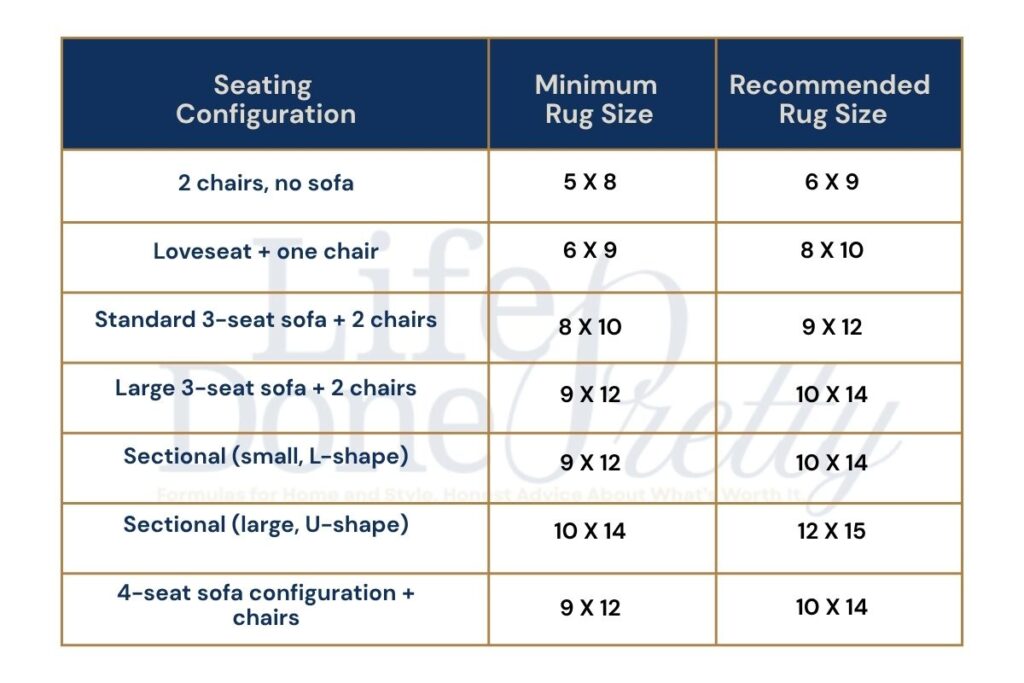
A note on sectionals: measure the full footprint of the sectional before selecting a rug. The rug should extend at least to the front edge of every seating section. A sectional that wraps a rug on two sides with one section hanging off the edge reads as poorly proportioned regardless of overall rug size.
Dining Room Rug Sizing
Dining room rugs follow a different rule than living room rugs because the furniture moves. Chairs pull out. People sit down and push back. A rug sized for the table at rest will strand the chair legs on the bare floor the moment anyone sits down, which creates both a visual and a functional problem — chair legs catching on the rug edge is one of the most common complaints about dining room rugs, and it is entirely a sizing problem.
The rule is 24 inches beyond the table edge on all sides. This ensures that chairs remain fully on the rug when pulled out to a seated position.
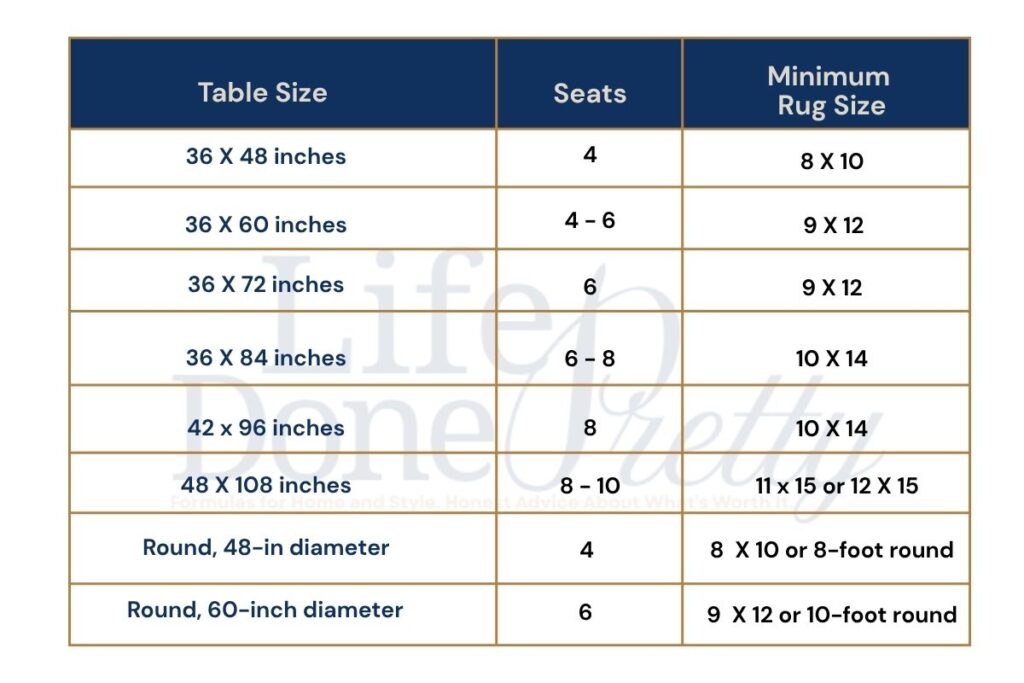
For round tables, a round rug is the strongest choice — it maintains the visual logic of the table’s shape and simplifies the 24-inch extension calculation. A rectangular rug under a round table works but requires more careful centering to avoid an asymmetric floor reveal on the corners.
Bedroom Rug Sizing
Bedroom rugs serve a specific functional purpose in addition to an aesthetic one: bare feet should land on rug, not cold floor, when getting out of bed. This means the rug needs to extend far enough beyond the bed on both sides and at the foot to be useful, not just visible.
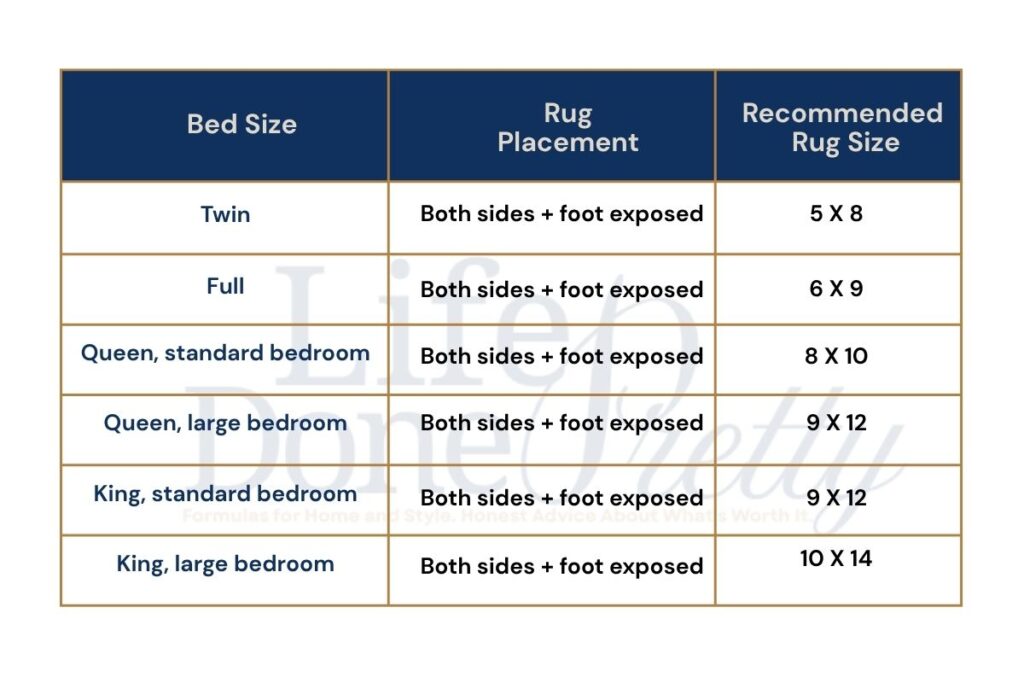
The standard is 18 to 24 inches of rug beyond the bed frame on the sides and foot. The rug does not need to extend under the full bed — placing the rug two-thirds of the way under the bed from the foot is the most common and most practical approach, keeping the visible rug proportional without requiring an oversized piece that disappears entirely under the bed frame.
An alternative approach for larger bedrooms is two runners placed on either side of the bed rather than one large rug. This works well in rooms with a wide footprint where a single centered rug would require an impractical size to clear both sides. Runners should be at least 2.5 feet wide and long enough to extend from the nightstand to the foot of the bed.
The Test Before You Buy
Before ordering any rug, tape its dimensions on the floor and place the furniture in position around it. Confirm that front legs land on the tape. Confirm that the floor reveal is between 18 and 24 inches on the walls you care about most. Confirm that in the dining room, a pulled-out chair sits fully within the taped boundary.
If the tape test reveals that the size you were considering is too small — and it frequently will — size up before ordering, not after delivery. Rug returns are logistically painful. The tape costs nothing. Read more about scale.
A rug that is too large is a far more solvable problem than a rug that is too small. A large rug can be recentered, can anchor a larger grouping, can move to a different room. A small rug has one use: reminding you to size up next time.
When in doubt, go bigger. Almost no one has ever stood in a finished room and wished the rug were smaller.
Frequently Asked Questions
A standard three-seat sofa paired with two chairs requires a minimum 8×10 rug, with a 9×12 recommended for a properly anchored arrangement. The front legs of all seating pieces should rest on the rug. If the front legs of any piece fall short of the rug edge, the rug is too small regardless of how it reads in the room overall.
The standard floor reveal is 18 to 24 inches between the rug edge and the wall on all sides. Less than 18 inches reads as wall-to-wall carpet. More than 24 inches and the rug begins to look like a mat. When the floor reveal guideline conflicts with the furniture grouping rule — where properly anchoring the furniture requires a larger rug — prioritize the furniture. The furniture grouping always wins.
The most likely cause is that the rug is too small. Dining room rugs need to extend 24 inches beyond the table edge on all sides so that chairs remain fully on the rug when pulled out. A rug sized only for the table at rest will leave chair legs stranded on the bare floor the moment anyone sits down, which reads as both visually and functionally wrong.
A king bed in a standard bedroom requires a 9×12 rug. In a larger bedroom, a 10×14 is the better choice. Position the rug so it extends 18 to 24 inches beyond the bed frame on both sides and at the foot, with the rug running two-thirds of the way under the bed from the foot. This ensures bare feet land on rug when getting out of bed on either side.
Too big, without exception. An oversized rug can be recentered, can anchor a larger furniture grouping, or can move to a different room where it fits correctly. An undersized rug has no comparable recovery. It will make correctly scaled furniture look unanchored and the room look unfinished regardless of every other correct decision in the space.
es, and in larger bedrooms it is often the more practical solution. Two runners — one on each side of the bed — placed from the nightstand to the foot of the bed cover the functional ground contact points without requiring an impractically large single rug. Runners should be at least 2.5 feet wide. Match them as a pair rather than using two unrelated rugs, which reads as indecision rather than intention.
A round table with a 48-inch diameter seats four and needs an 8×10 rectangular rug or an 8-foot round rug. A 60-inch round table seats six and needs a 9×12 or a 10-foot round rug. A round rug under a round table maintains the visual logic of the table’s shape and simplifies sizing — the 24-inch extension rule applies equally in all directions, which a round rug handles naturally.
Large rugs — anything 9×12 and above — are where the size premium hits hardest at standard retail, and they are also where the secondary and discount markets deliver the most value.
Warehouse clubs such as Costco and Sam’s Club periodically carry large rugs at significantly below-market prices, but inventory is seasonal and inconsistent — check regularly rather than counting on a specific size being available. Closeout and discount home retailers such as HomeGoods, TJ Maxx Home, and Ollie’s turn over inventory quickly and occasionally carry large-format rugs at substantial reductions, though selection is unpredictable by design.
Estate sales are one of the most underused sources for quality large rugs. Older homes frequently contain well-made wool or Persian rugs in sizes that are expensive new, sold at a fraction of replacement cost because the estate is liquidating rather than pricing to market. Habitat for Humanity ReStores accept and resell donated rugs and are worth checking regularly in larger metropolitan areas.
For genuinely custom sizing, ask at a home improvement retailer such as Home Depot or Lowe’s whether they will cut wall-to-wall carpet to a specified dimension. Not every location offers this service and policies vary, but those that do can produce a custom-sized rug from broadloom carpet at a fraction of the cost of a comparably sized area rug. Request that the edges be bound or serged after cutting — without binding, the carpet edges will fray. Some locations bind on-site; others refer to a local carpet workroom.
Yes, without exception. A rug without a pad on a hard floor is a slip hazard, and a rug without a pad on any surface will move, bunch, and wear unevenly over time. The pad protects the rug from below and the floor from above — hardwood and luxury vinyl in particular can be scratched or discolored by direct rug contact over time.
The type of pad depends on the surface beneath it. On hard floors — hardwood, tile, luxury vinyl, laminate — use a non-slip pad with a felt or felt-and-rubber construction. Felt provides cushioning and protects the floor surface. Rubber provides grip. A combined felt-and-rubber pad does both and is the most practical choice for most hard floor situations. Avoid pads made entirely of PVC or cheap rubber on hardwood or luxury vinyl — these can off-gas and permanently discolor the floor finish.
On carpet, the priority shifts from grip to prevention of bunching. Use a thin rubber waffle-pattern pad designed specifically for rug-over-carpet applications. Felt pads compress under foot traffic and lose effectiveness on carpet — the rubber waffle construction grips the carpet pile without damaging it.
Size the pad to finish one inch shorter than the rug on all sides. A pad that matches the rug exactly will create a visible edge ridge under the rug. A pad that is too small will allow the rug edges to curl. One inch of setback on all sides keeps the pad invisible and the rug flat.
The standard floor reveal is 18 to 24 inches between the rug edge and the wall on all sides. Less than 18 inches reads as wall-to-wall carpet. More than 24 inches and the rug begins to look like a mat. When the floor reveal guideline conflicts with the furniture grouping rule — where properly anchoring the furniture requires a larger rug — prioritize the furniture. The furniture grouping always wins.
A king bed in a standard bedroom requires a 9×12 rug. In a larger bedroom, a 10×14 is the better choice. Position the rug so it extends 18 to 24 inches beyond the bed frame on both sides and at the foot, with the rug running two-thirds of the way under the bed from the foot. This ensures bare feet land on rug when getting out of bed on either side.
Too big, without exception. An oversized rug can be recentered, can anchor a larger furniture grouping, or can move to a different room where it fits correctly. An undersized rug has no comparable recovery. It will make correctly scaled furniture look unanchored and the room look unfinished regardless of every other correct decision in the space.
Yes, and in larger bedrooms it is often the more practical solution. Two runners — one on each side of the bed — placed from the nightstand to the foot of the bed cover the functional ground contact points without requiring an impractically large single rug. Runners should be at least 2.5 feet wide. Match them as a pair rather than using two unrelated rugs, which reads as indecision rather than intention.
Yes, and in larger bedrooms it is often the more practical solution. Two runners — one on each side of the bed — placed from the nightstand to the foot of the bed cover the functional ground contact points without requiring an impractically large single rug. Runners should be at least 2.5 feet wide. Match them as a pair rather than using two unrelated rugs, which reads as indecision rather than intention.
A round table with a 48-inch diameter seats four and needs an 8×10 rectangular rug or an 8-foot round rug. A 60-inch round table seats six and needs a 9×12 or a 10-foot round rug. A round rug under a round table maintains the visual logic of the table’s shape and simplifies sizing — the 24-inch extension rule applies equally in all directions, which a round rug handles naturally.
Large rugs — anything 9×12 and above — are where the size premium hits hardest at standard retail, and they are also where the secondary and discount markets deliver the most value.
Warehouse clubs such as Costco and Sam’s Club periodically carry large rugs at significantly below-market prices, but inventory is seasonal and inconsistent — check regularly rather than counting on a specific size being available. Closeout and discount home retailers such as HomeGoods, TJ Maxx Home, and Ollie’s turn over inventory quickly and occasionally carry large-format rugs at substantial reductions, though selection is unpredictable by design.
Estate sales are one of the most underused sources for quality large rugs. Older homes frequently contain well-made wool or Persian rugs in sizes that are expensive new, sold at a fraction of replacement cost because the estate is liquidating rather than pricing to market. Habitat for Humanity ReStores accept and resell donated rugs and are worth checking regularly in larger metropolitan areas.
For genuinely custom sizing, ask at a home improvement retailer such as Home Depot or Lowe’s whether they will cut wall-to-wall carpet to a specified dimension. Not every location offers this service and policies vary, but those that do can produce a custom-sized rug from broadloom carpet at a fraction of the cost of a comparably sized area rug. Request that the edges be bound or serged after cutting — without binding, the carpet edges will fray. Some locations bind on-site; others refer to a local carpet workroom.
Yes, without exception. A rug without a pad on a hard floor is a slip hazard, and a rug without a pad on any surface will move, bunch, and wear unevenly over time. The pad protects the rug from below and the floor from above — hardwood and luxury vinyl in particular can be scratched or discolored by direct rug contact over time.
The type of pad depends on the surface beneath it. On hard floors — hardwood, tile, luxury vinyl, laminate — use a non-slip pad with a felt or felt-and-rubber construction. Felt provides cushioning and protects the floor surface. Rubber provides grip. A combined felt-and-rubber pad does both and is the most practical choice for most hard floor situations. Avoid pads made entirely of PVC or cheap rubber on hardwood or luxury vinyl — these can off-gas and permanently discolor the floor finish.
On carpet, the priority shifts from grip to prevention of bunching. Use a thin rubber waffle-pattern pad designed specifically for rug-over-carpet applications. Felt pads compress under foot traffic and lose effectiveness on carpet — the rubber waffle construction grips the carpet pile without damaging it.
Size the pad to finish one inch shorter than the rug on all sides. A pad that matches the rug exactly will create a visible edge ridge under the rug. A pad that is too small will allow the rug edges to curl. One inch of setback on all sides keeps the pad invisible and the rug flat.
Too big, without exception. An oversized rug can be recentered, can anchor a larger furniture grouping, or can move to a different room where it fits correctly. An undersized rug has no comparable recovery. It will make correctly scaled furniture look unanchored and the room look unfinished regardless of every other correct decision in the space.
Yes, and in larger bedrooms it is often the more practical solution. Two runners — one on each side of the bed — placed from the nightstand to the foot of the bed cover the functional ground contact points without requiring an impractically large single rug. Runners should be at least 2.5 feet wide. Match them as a pair rather than using two unrelated rugs, which reads as indecision rather than intention.
A round table with a 48-inch diameter seats four and needs an 8×10 rectangular rug or an 8-foot round rug. A 60-inch round table seats six and needs a 9×12 or a 10-foot round rug. A round rug under a round table maintains the visual logic of the table’s shape and simplifies sizing — the 24-inch extension rule applies equally in all directions, which a round rug handles naturally.
Yes, and in larger bedrooms it is often the more practical solution. Two runners — one on each side of the bed — placed from the nightstand to the foot of the bed cover the functional ground contact points without requiring an impractically large single rug. Runners should be at least 2.5 feet wide. Match them as a pair rather than using two unrelated rugs, which reads as indecision rather than intention.
A round table with a 48-inch diameter seats four and needs an 8×10 rectangular rug or an 8-foot round rug. A 60-inch round table seats six and needs a 9×12 or a 10-foot round rug. A round rug under a round table maintains the visual logic of the table’s shape and simplifies sizing — the 24-inch extension rule applies equally in all directions, which a round rug handles naturally.
Large rugs — anything 9×12 and above — are where the size premium hits hardest at standard retail, and they are also where the secondary and discount markets deliver the most value.
Warehouse clubs such as Costco and Sam’s Club periodically carry large rugs at significantly below-market prices, but inventory is seasonal and inconsistent — check regularly rather than counting on a specific size being available. Closeout and discount home retailers such as HomeGoods, TJ Maxx Home, and Ollie’s turn over inventory quickly and occasionally carry large-format rugs at substantial reductions, though selection is unpredictable by design.
Estate sales are one of the most underused sources for quality large rugs. Older homes frequently contain well-made wool or Persian rugs in sizes that are expensive new, sold at a fraction of replacement cost because the estate is liquidating rather than pricing to market. Habitat for Humanity ReStores accept and resell donated rugs and are worth checking regularly in larger metropolitan areas.
For genuinely custom sizing, ask at a home improvement retailer such as Home Depot or Lowe’s whether they will cut wall-to-wall carpet to a specified dimension. Not every location offers this service and policies vary, but those that do can produce a custom-sized rug from broadloom carpet at a fraction of the cost of a comparably sized area rug. Request that the edges be bound or serged after cutting — without binding, the carpet edges will fray. Some locations bind on-site; others refer to a local carpet workroom.
Large rugs — anything 9×12 and above — are where the size premium hits hardest at standard retail, and they are also where the secondary and discount markets deliver the most value.
Warehouse clubs such as Costco and Sam’s Club periodically carry large rugs at significantly below-market prices, but inventory is seasonal and inconsistent — check regularly rather than counting on a specific size being available. Closeout and discount home retailers such as HomeGoods, TJ Maxx Home, and Ollie’s turn over inventory quickly and occasionally carry large-format rugs at substantial reductions, though selection is unpredictable by design.
Estate sales are one of the most underused sources for quality large rugs. Older homes frequently contain well-made wool or Persian rugs in sizes that are expensive new, sold at a fraction of replacement cost because the estate is liquidating rather than pricing to market. Habitat for Humanity ReStores accept and resell donated rugs and are worth checking regularly in larger metropolitan areas.
For genuinely custom sizing, ask at a home improvement retailer such as Home Depot or Lowe’s whether they will cut wall-to-wall carpet to a specified dimension. Not every location offers this service and policies vary, but those that do can produce a custom-sized rug from broadloom carpet at a fraction of the cost of a comparably sized area rug. Request that the edges be bound or serged after cutting — without binding, the carpet edges will fray. Some locations bind on-site; others refer to a local carpet workroom.
Yes, without exception. A rug without a pad on a hard floor is a slip hazard, and a rug without a pad on any surface will move, bunch, and wear unevenly over time. The pad protects the rug from below and the floor from above — hardwood and luxury vinyl in particular can be scratched or discolored by direct rug contact over time.
The type of pad depends on the surface beneath it. On hard floors — hardwood, tile, luxury vinyl, laminate — use a non-slip pad with a felt or felt-and-rubber construction. Felt provides cushioning and protects the floor surface. Rubber provides grip. A combined felt-and-rubber pad does both and is the most practical choice for most hard floor situations. Avoid pads made entirely of PVC or cheap rubber on hardwood or luxury vinyl — these can off-gas and permanently discolor the floor finish.
On carpet, the priority shifts from grip to prevention of bunching. Use a thin rubber waffle-pattern pad designed specifically for rug-over-carpet applications. Felt pads compress under foot traffic and lose effectiveness on carpet — the rubber waffle construction grips the carpet pile without damaging it.
Size the pad to finish one inch shorter than the rug on all sides. A pad that matches the rug exactly will create a visible edge ridge under the rug. A pad that is too small will allow the rug edges to curl. One inch of setback on all sides keeps the pad invisible and the rug flat.